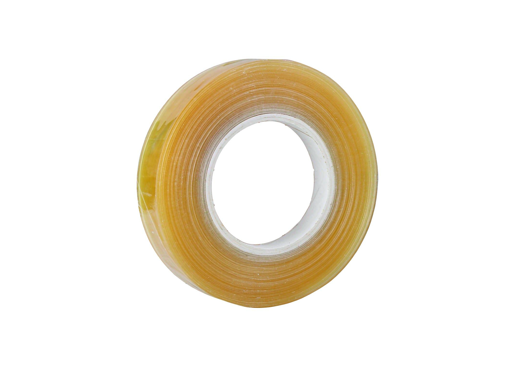
3M Scotch 610 is a transparent cellophane single-coat light-duty tape in the Scotch light-packaging family, total about 2.3mil/0.058mm (some regional pages list 0.05mm total; follow the SKU TDS—cellophane backing 0.036mm/1.43mil), one-side pressure-sensitive rubber-resin adhesive, 3in core, commonly 66m/72yd or regional 55m/65.8m.
It is built for high initial tack, low elongation, heat resistance and low-residue removal: light carton closure, L-clips, labeling/tabbing, splicing and high-temperature temporary holding; because cellophane is dimensionally stable and the rubber-resin bond is consistent, it is also used in electronics/coating shops for adhesion checks on paints, inks and special surface treatments. Versus UPVC/PP/PET light tapes, its wood-pulp/cotton-cellulose film has low stretch and stays stable up to about 140–149°C/300°F short term without softening or elongating.
Structure
Backing
Cellophane
Adhesive
Rubber
Features
Cellophane low elongation, no stretch: elongation only 15%; tabbing/test lift does not spring back or lengthen—more dimensionally stable than UPVC 600 (45%), PP 605 (57%) and UPVC 640 (65%), cheaper than PET, more transparent/moisture-stable than paper.
Rubber-resin high initial tack: immediate grab on steel/board/rigid plastic/some hard-to-bond plastics; better startup than many acrylic light tapes for splicing, L-clips and hot-temp temporary tabs.
Heat stable to about 300°F/140–149°C: cellophane stays dimensional on wide applications; air dryer, curing-check, sealer-adjacent tabbing without softening/elongation—hotter than ordinary UPVC office tape, not for long oven main fixing.
Low-residue removal, coating-test friendly: lifts from many surfaces with little transfer for electronics paint/ink/special-treatment adhesion checks; cleaner than low-end hot-melt and heavy hot-melt shipping tape.
Wood-pulp/cotton cellulose, less fossil plastic: 32μm cellophane from wood pulp or cotton cellulose as a sustainability alternative to UPVC/PP/PET; dual light-packaging and test use versus pure plastic film.
Controlled unwind for hand/dispenser: consistent unwind for manual L-clip, line tabbing and lab strips; smoother than untreated thick film, simpler than silicone-liner conversion tape.
High clarity for inspection: seals/samples/labels/tabs without hiding text or coating; less visible edge than kraft/duct/colored PVC, though rubber-based 610 ages less well under long UV than acrylic 600.
Directional strength: MD ~40N/cm, CD ~70N/cm, cross-direction crack resistance; narrow tab/splice/test strip less likely to break longitudinally than thin rubber film.
Applications
Light carton/L-clip: small corrugated, inner boxes and sample boxes with L-clip closure; cellophane does not stretch, dispenser-friendly.
Labeling and tabbing: invoices, price tags, manuals, PCB/electronic sample tabs and cards temporary fix; clear and later low-residue.
Splicing and web joints: light splicing of paper/film/label rolls; low elongation avoids tight/loose edges vs high-stretch UPVC.
High-temp temporary hold: hot-air/dryer-adjacent, electronic-process tabs, non-contact sealer small-part positioning up to ~140–149°C short term without soften/stretch.
Electronics coating adhesion checks: phone/appliance/3C housing paint, ink, foil and UV coating pre-screen for cross-cut/pull; use same pressure/speed/cure and spec method, not hand-only.
Hard-to-bond plastic temporary fix: some PP/ABS/PS/rigid PVC molds and assembly pre-positioning where rubber-resin initial tack beats some acrylic light tapes; very-low-surface energy still needs primer/sample.
Gift/promo/garment tab: gift baskets, promo bundles and garment inner-pack tabs in narrow clear strips; test fabric for long removable use.
Lab/QC sample hold: coated panels, printed samples and painted metal for transport/comparison with low adhesive transfer on removal.